Thai massage pressure in Greenock: how to choose soft, medium or deep
Thai massage pressure in Greenock: start with your problem area, not the hardest setting
Have you ever asked for “as deep as you can go” and left more tense than you arrived? Choosing your Thai massage pressure in Greenock starts with where it hurts, not with the hardest setting. I’m Jariya Malone.
I trained at Wat Po in Bangkok and I treat people on Kelly Street in Greenock. I have watched plenty of clients ask for maximum pressure when what they needed was moderate, consistent work with assisted stretching.
That is why Thai Massage Greenock prices soft pressure and medium or deep pressure separately. They are different treatments with different goals, so picking one is part of booking, not an afterthought. Check the online booking form for current prices.
Book online now and choose your pressure as you book.
Below is the plain script I give nervous first-timers, so you never have to guess what to say mid-session.
What soft, medium and deep pressure actually feel like
Here is the quick version. Think of pressure on a scale where 1 is a light touch and 10 is the most you could bear.
| Level | Scale | What it feels like | Who usually chooses it |
|---|---|---|---|
| Soft | 3 to 4 | Slow, flowing, calming. You notice the warmth and rhythm more than the pressure | First-timers, people unwinding after a rough few months, anyone tender or nervous |
| Medium | 5 to 6 | Firm and steady. You feel it working but can breathe through it | Most regulars with a recurring ache |
| Deep | 7 to 8 | Strong, focused pressure on knots and tight bands | People who know their body and have a stubborn spot |
Nobody needs a 9 or 10. If you are holding your breath or tensing up, the muscle is defending itself, and that defeats the purpose.
Why “deeper is better” misses the point
The common advice is simple: the harder the pressure, the better the result. In my experience, that gets it backwards. Pressure is only useful up to the point where the muscle lets it in.
I once had a client who was convinced they needed the hardest pressure every visit. After the first session I explained that they needed consistent, moderate pressure on the upper back, plus assisted stretching to release what desk work had locked in. Three months later their neck pain had completely changed, and they stopped asking for the hardest pressure possible.
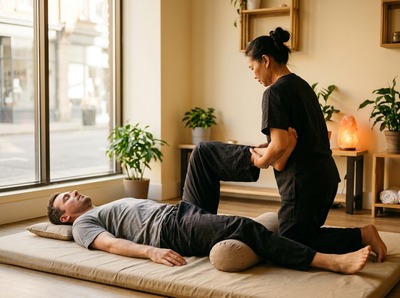
In my experience, clients who walk in asking for a 9 usually settle happily at a 5 or 6 within the first twenty minutes, once the muscle stops guarding. I see this most with people who take the train from Greenock Central to Glasgow and spend the day at a laptop. Their upper back is braced rather than knotted.
Stretching opens it up where force simply makes it brace harder.
We’ve seen clients at Thai Massage Greenock who book deep pressure for a sore lower back when the real tightness sits in the hips. A steady 5 on the back, followed by a long assisted hip stretch on the mat, reached it. A 9 pressed straight into the sore spot never would have.
At Wat Po, we were taught to lean in with body weight and hold, not to push with arm strength. A steady 6 held for three or four slow breaths does more than a sharp 8 that lasts a second. The muscle needs time to decide it is safe to let go.
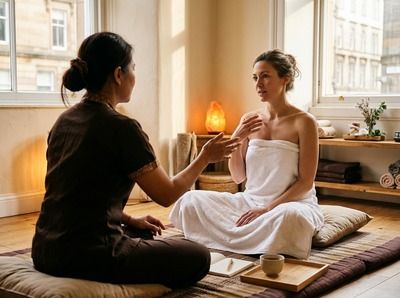
I write down the number each client settles at in their treatment notes. Next visit, we start there instead of at guesswork, and we only go firmer if the muscle asks for it.
Thai massage is not just rubbing. As Wikipedia describes traditional Thai massage, practitioners compress, stretch and rock the body rather than simply working the muscle. The stretching reaches restrictions that pressure alone cannot, so a firmer thumb is often the wrong tool.
The Wat Po Check-In: tell me before we start
The Wat Po Check-In is a short consultation at the start of each visit where I ask about pain, pressure and goals before choosing techniques. Answer it with the body part first, then the feeling. “Left shoulder, tight and tender, travelling down my back” tells me far more than “deep tissue please”.
Our reviews show how this plays out. One client wrote that I “tailored the massage to my needs” and “checked pressure was ok and made me feel at ease throughout.” Another had two knots on one side of their back that had bothered them for two months. Naming the spot let me go straight to it.
If you want help choosing, here is my rule of thumb:
- First visit or feeling nervous: book soft or medium, and tell me you have never had Thai massage before.
- A recurring ache such as lower back, shoulders, neck or knees: book medium or deep, and name the area.
- Injury, pregnancy, recent surgery or osteoporosis: tell me before we begin so I can keep pressure lighter and avoid certain areas.
The pressure script: five sentences to use mid-session
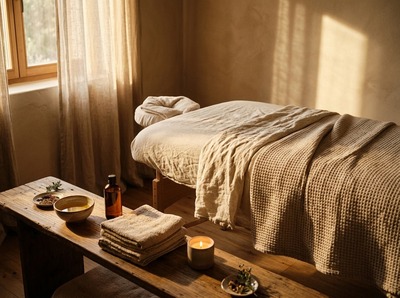
Most people stay quiet because they think speaking up is rude. It is the opposite. I would always rather hear it, and I am reading your body and adjusting constantly anyway.
- “Can you go a bit softer?” Use this when you feel yourself tensing.
- “That’s about a 6, can you stay there?” Numbers are quick and leave no room for confusion.
- “Could you go firmer on this spot?” Point to it or name it.
- “That’s a good hurt.” This means you feel the release and want me to stay.
- “That’s a bad hurt.” Sharp, hot or electric sensations mean stop, and I will.
Pressure and discomfort are very different things. A firm, releasing ache is fine. Pain that makes you flinch is not.
How to tell good discomfort from pain, and what to expect afterwards
Good discomfort eases as I hold the pressure and you can still breathe slowly. Pain makes you tense, hold your breath or want to pull away, and that is your cue to speak.
Some mild tenderness the next day is common after firmer work. The Cleveland Clinic explains why your body can feel worse after a massage, and the same advice as for exercise soreness applies: drink water and rest. I do not believe you should be sore for days to prove it worked.
A good session leaves you released and rested.
Does the firmer option suit a Thai oil massage or a mat session?
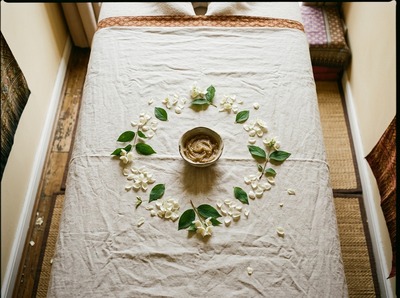
Both can be adjusted. Thai Oil Massage uses therapeutic oils with flowing strokes and targeted pressure, and it is where many of our regulars book their deeper work on shoulders, back and knees. Traditional Thai Massage is done fully clothed on a mat with acupressure and assisted stretching, and it suits people who feel locked up rather than just sore.
If you want something gentler, Thai Foot Massage is a calming way to ease in.
Make the pressure part of your routine
I have noticed that clients who come regularly, even once a month, progress faster than people who only come in a crisis. Your body remembers the work from last time, so each visit builds on the one before. That also means your ideal pressure often shifts.
Many people start at medium and find that after a few visits they get more from a softer touch plus stretching, because the big knots have already gone.
Picture someone from Port Glasgow who spends the week lifting and bending at work. They might book deep pressure for the first few sessions. By the second month, a 5 with longer stretches through the hips and lower back often does more for them than a 7 ever did.
Whether you are coming from Gourock, Port Glasgow or just round the corner, you can book your session online and add a note about your pressure preference. Then, in the room, use the script and let me know the moment it changes. Before you leave, we can agree your next visit, because the real result of getting pressure right shows up at the fifth session, not the first.
Found this useful? Add thaimassagegreenock.co.uk as a preferred source on Google so our latest guides show up first for you in Search and AI Overviews.