Thai Foot Massage: Why It's More Than a Foot Rub
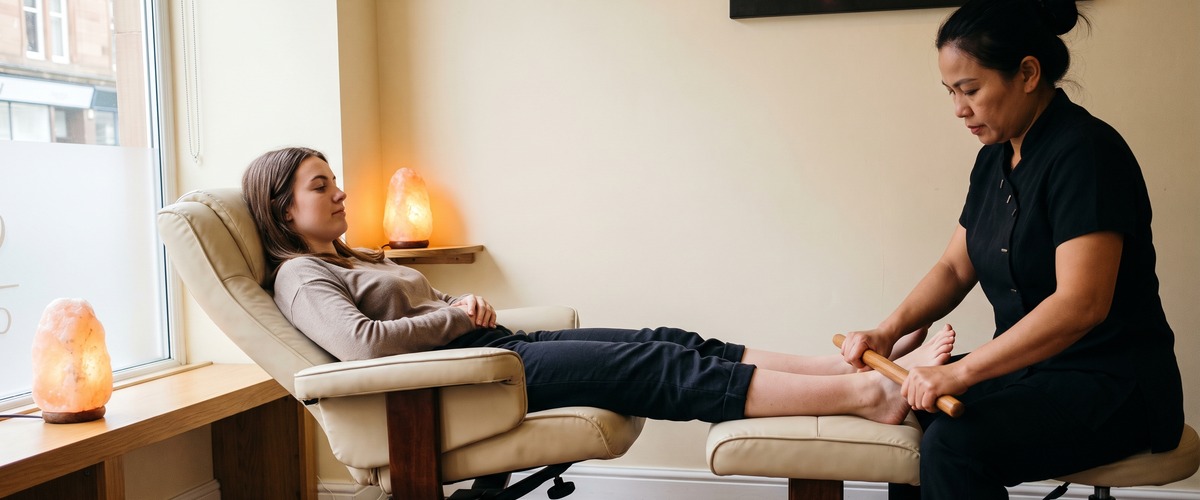
Thai foot massage works by pressing thumbs and a wooden stick along the sen energy lines running through the foot and calf, physically releasing tight fascia and easing nerves that get compressed from hours of standing or walking. That is a different claim from the one most articles make. Search “Thai foot massage” and you’ll find chart after chart insisting your big toe connects to your sinuses and your heel connects to your lower back, as if the whole treatment were reflexology wearing a different name.
It isn’t. Traditional Thai massage, foot and leg work included, is built on sen lines. That framework comes from the same tradition taught at Bangkok’s Wat Po temple, not from a Victorian-era reflex chart bolted on later.
At Thai Massage Greenock, Jariya Malone works those lines with her thumbs and a wooden stick. What she is releasing is fascia and nerve pathways in your foot and calf, not a switchboard to your organs. You can book a session online and feel the difference for yourself.
Thai Foot Massage: What’s Actually Happening Under the Wooden Stick
Thai Foot Massage is one of six treatments Thai Massage Greenock offers. It’s built as a foot and lower leg treatment, not a foot-only rub.
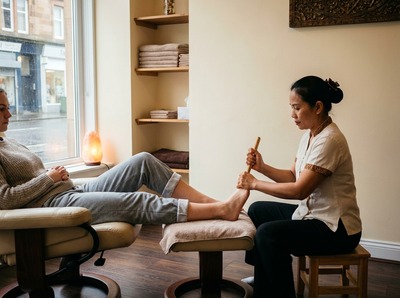
The wooden stick, or mai nuad, lets a therapist put steady, precise pressure on a point along the sen line. Doing that same job by hand for an hour would wear the thumbs out.
The stick isn’t the only tool. Thumbs, knuckles and forearms do most of the work, and a little balm may go on the skin at the end. The main session runs dry, which is what makes the ankle and toe stretching possible.
Traditional Thai medicine describes a network of energy channels called sen lines. The old texts count as many as 72,000, though practitioners work with ten main pathways known as the Sen Sib.
Foot and leg work follows the lines that run from the sole up through the calf. That is exactly why the treatment doesn’t stop at your ankle the way a spa “foot rub” usually does.
The Organ Chart Myth Doesn’t Match the Training
The reflexology organ map you see on generic blogs comes from a separate Western system, built in the early 20th century. It isn’t part of Thai massage’s own tradition.
Jariya trained at Wat Po under her mother, who is also Wat Pho trained. Neither of them was taught to link a section of the heel with your kidneys. What they were taught was sen line anatomy: where the lines run, how they relate to muscle and nerve, and how pressure along them changes what a client feels.
The common advice is to pick your treatment off the organ chart — sinus trouble, so press the toes. Here’s why that misses the point: it sends you looking for a reflex zone when the thing actually aching is the tissue itself. In our experience the client who books a foot treatment for “tired feet” is usually carrying a locked-up calf, and no amount of pressing the arch as a proxy for an organ will touch it.
That difference matters when you’re comparing treatments. A Western or Swedish foot massage is usually oil-based kneading on the sole and top of the foot.
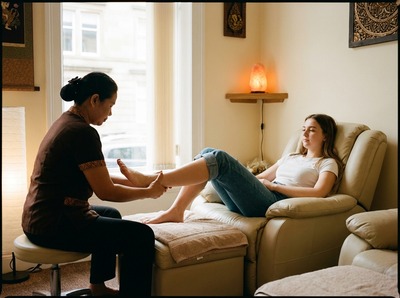
Thai foot massage works dry. It tracks the sen lines up into the calf and folds in assisted stretching of the ankle and toes. The session covers a lot more ground than a standard foot rub.
Thai Foot and Leg Massage Works the Calf Not Just the Sole
This is the part that surprises most first-time clients. A good chunk of the session happens above your ankle.
Tight calf muscles pull on the fascia that wraps the foot. That pull is often where heel and arch pain actually starts, rather than in the sole itself.
A 2019 study by researchers Yelverton, Rama, and Zipfel at the University of Johannesburg was published in Health SA Gesondheid. It compared hands-on treatments for long-term heel pain.
The best results came from combining friction work on the plantar fascia with stretching of the calf. Pain, movement, and ankle range all improved most in that group. That lines up with what Thai foot and leg massage does: work the calf as well as the foot, never the foot on its own.
Why Working the Calf Releases Trapped Nerves in the Foot
Nerve compression in the foot is real and well documented. Tarsal tunnel syndrome is one example.
It happens when the posterior tibial nerve gets squeezed as it passes through a narrow space on the inside of the ankle, and tight surrounding tissue can make it worse. Thai foot massage doesn’t diagnose or treat that condition. But easing the fascia and muscle around a squeezed nerve is exactly the kind of mechanical work sen line pressure and calf release are built for.
Jariya sees the same instinct with feet that she sees everywhere else in the treatment room. She remembers a client who was sure they needed the hardest possible pressure every time, assuming harder always meant better.
She showed them that steady, moderate pressure with assisted stretching did more for their tension than force ever did. The same logic applies at the ankle. Work the calf fascia steadily over a few sessions and the ache that brought you in eases.
The therapist doesn’t need to dig in like it’s a contest. Reviewers who’ve had the treatment tend to notice the difference straight away.
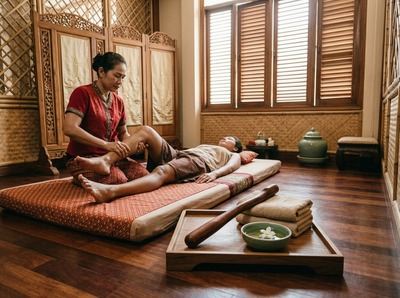
One client booked the one-hour feet and leg massage and called it the best massage they’d had. That phrasing, feet AND leg, is the giveaway that this isn’t a stripped-down reflexology session.
Another arrived with tightness in one shoulder that ran down their back, said so at the start, and left with none of it. Same principle, different limb: name the problem, and the session gets built around it rather than around a standard routine.
What to Wear and Expect at Your First Thai Foot Massage
If you’re nervous about a first session, you’re not the only one. Reviewers often mention arriving anxious about a treatment they’d never tried.
They relaxed once Jariya walked them through each step and checked the pressure was comfortable as she went. That check-in habit matters more with a wooden stick than with hands alone, because the tool puts pressure into a smaller point.
Wear something you can roll up past the knee, since the calf work is part of the treatment rather than an add-on. Socks and shoes come off, and it’s worth skipping ankle jewellery.
If you’re managing diabetes or any nerve condition affecting feeling in your feet, mention it before the session starts. The pressure and stick work can then be adjusted to suit. Same if you’re pregnant: say so when you book, because certain ankle points are avoided and the position may change.
There’s a practical reason to sort this locally rather than chase a deal. Glasgow’s booking sites list foot massage as a cheap 25-minute add-on, and Inverclyde people regularly ask in local Facebook groups where to find the real thing closer to home. A 25-minute slot buys you the sole. It doesn’t buy you the calf work that makes the difference.
Thai foot massage earns its name from where it works, not from a chart pretending your toes are wired to your organs. It’s sen line pressure, calf fascia release, and nerve-aware technique built for the whole lower leg.
It’s delivered by a Wat Po trained therapist, not read off a poster. If your feet and calves are carrying more than they should after a week in Inverclyde, whether that’s a shift on your feet or a day exploring the town, book your Thai foot massage and let the sen lines do the work the chart never could.
Found this useful? Add thaimassagegreenock.co.uk as a preferred source on Google so our latest guides show up first for you in Search and AI Overviews.